Drawing and DFM review
Engineers review datum structure, bend allowances, tolerance stack, surface finish, revision notes and inspection access. Risk notes are returned before tooling, equipment or machinery parts enter production planning.
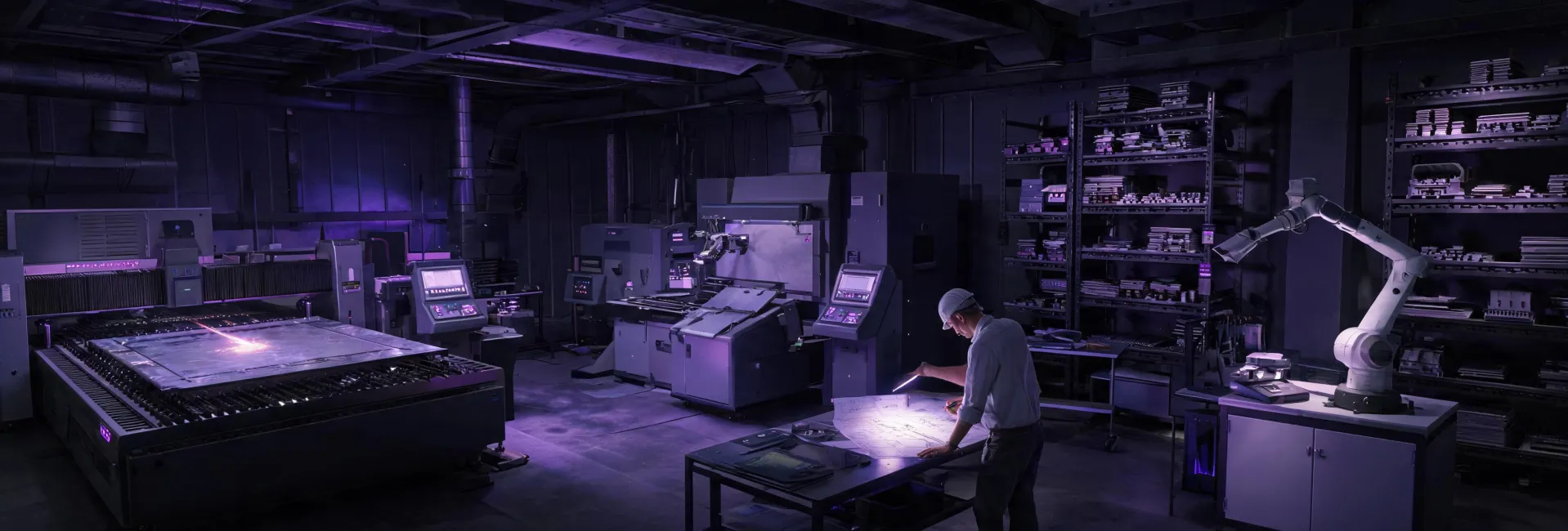
Every engagement starts with a manufacturability and documentation review, then moves through routed sourcing, inspection planning and release evidence. The workflow is designed for engineering, quality and sourcing teams that need more than a price per part.
Salvagnini separates the work into engineering review, manufacturing execution and quality release so ownership stays clear from first RFQ through final shipment.
Engineers review datum structure, bend allowances, tolerance stack, surface finish, revision notes and inspection access. Risk notes are returned before tooling, equipment or machinery parts enter production planning.
Process routes are assigned to laser cutting, CNC bending, machining, grinding, coating, assembly and inspection operations with supplier qualification evidence tied to the manufacturing record.
Final packages can include material certificates, calibration status, dimensional reports, AS9102-style FAI, PPAP Level 3 records and controlled nonconformance dispositions.
NDA request, file receipt, drawing set inventory and revision control are confirmed before engineering comments begin.
GD&T, fit, material, equipment interface and inspection feasibility are checked against the required approval path.
Manufacturing operations are sequenced with clear acceptance points, hold points and CMM or gauge requirements.
Critical dimensions are verified, deviation requests are logged and release files are assembled for buyer review.
Production lots retain the same revision, inspection plan and material trace until the customer authorizes a change.
For regulated buyers, the most expensive failure is often not a bad part but an undocumented part. Salvagnini keeps the engineering trail visible so procurement, supplier quality and design teams can work from the same record.
Salvagnini does not promise zero defects or impossible universal tolerances. Instead, each program receives a defined acceptance plan, measurable inspection method and escalation path before the first lot is approved. OTIF and DPPM are tracked by program using internal QMS records and reviewed on a trailing 12-month basis.
Send drawings, acceptance criteria, target industry, annual demand and required documentation stack. If a tolerance, finish or approval method is risky, Salvagnini will call it out before the quotation becomes a commitment.